Morning Wake-Up
Good mornings (hip hinge), push-ups elevated, goblet-style squats with hands at chest, bird dogs, and high knees. Keeps noise moderate for early hours. Finish with shoulder rolls and deep breathing.

Structured fifteen-minute blocks with clear work and rest intervals — built for kitchens, living rooms, and the gap between video calls.
Every quick session on this page follows a repeatable skeleton: two minutes of warm-up, eleven minutes of work, two minutes of cool-down. Warm-up means arm circles, leg swings, and marching — nothing fancy. The work block uses five movements performed for forty-five seconds each with fifteen seconds to transition. That yields three full rounds in eleven minutes with one minute to spare for a breath.
Round one might be bodyweight squats, incline push-ups on a counter, reverse lunges alternating legs, a forearm plank, and step jacks. Round two repeats the same pattern; round three is your chance to add tempo — slower on the way down, explosive on the way up if your joints tolerate it. The template scales: beginners shorten work intervals to thirty seconds; experienced movers can add a fourth round by trimming rest to ten seconds.
Why forty-five seconds? Some exercise-science sources describe work intervals in the thirty-to-sixty-second range as a common way to structure muscular endurance practice without equipment. Intensity should feel challenging but sustainable — stop or modify if you feel dizzy or unwell.
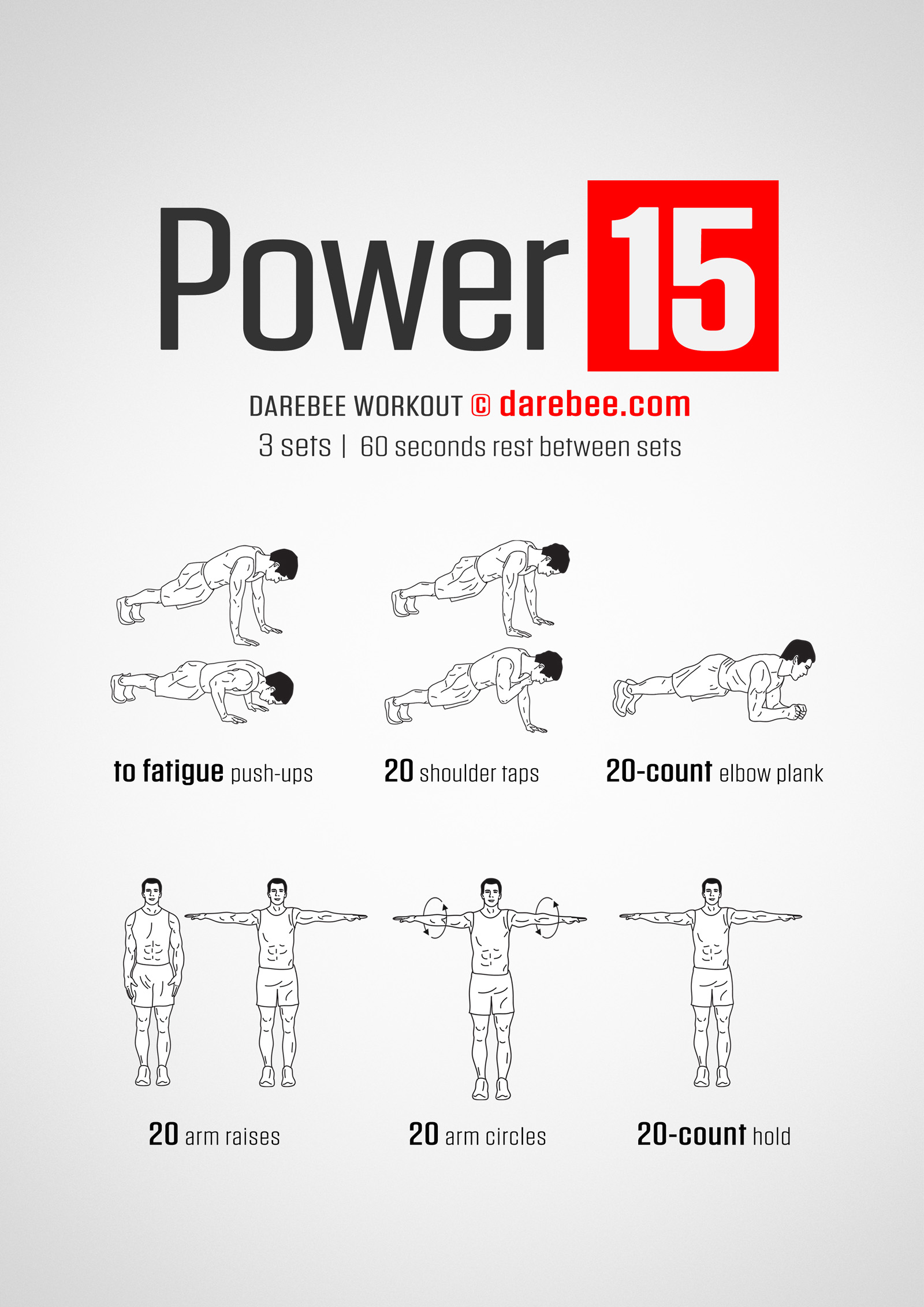 Write the five moves down once — reuse the list all week.
Good mornings (hip hinge), push-ups elevated, goblet-style squats with hands at chest, bird dogs, and high knees. Keeps noise moderate for early hours. Finish with shoulder rolls and deep breathing.
Walking lunges across the room, triceps dips on a stable chair, single-leg glute bridges, side plank each side, and standing knee drives. Ideal when you have exactly one break window.
Slow squats, wall push-ups, calf raises on a step, dead bug holds, and gentle torso twists. Lower heart rate gradually before sitting down to dinner.
Progression in bodyweight training comes from leverage, tempo, and range of motion — not from buying plates. When incline push-ups feel manageable, lower your hands to a step or the floor. When squats feel easy, add a three-second pause at the bottom. When lunges stabilize, try Bulgarian split squats with your rear foot on the couch.
Track completions in a notes app: date, session name, and one sentence on how it felt. Over four weeks, patterns emerge. Maybe Wednesdays are always rushed — swap Power Fifteen for a quieter Desk Break variant on those days. Adaptation is data, not failure.
Movement should challenge you without putting joints or balance at unnecessary risk. Use these practical checks before every quick session.
Pick one of the three sessions above, set a fifteen-minute countdown on your phone, and move. When you want deeper breakdowns of each exercise pattern, head to Bodyweight Basics.
Bodyweight Basics Try the Minute Slider